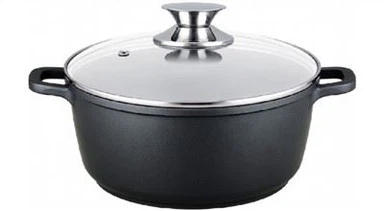
About non-stick pan, these 4 points you must know!
Aug 07, 2021
The emergence of non-stick pans provides conditions for healthy cooking with less oil, and makes it easier to clean cookware. However, as non-stick pans enter life, many people also ask whether there are health risks?
Coating of non-stick pan: The reason why non-stick pan is non-stick depends on the coating material on the inner surface of the pan. These coating materials have good lubricity, low friction coefficient, low surface tension, and food is not easy to stick to the pan.
There are two types of coating materials commonly used for non-stick pans: one is fluoropolymer, such as polytetrafluoroethylene, and the other is silicone polymer.
Upper limit of operating temperature: The upper limit of safe operating temperature of non-stick pan is 260℃. If this temperature is exceeded, the non-stick coating may decompose and produce some toxic gases. The smoking temperature of general edible oil is about 200℃, which is less than the upper limit of safety. Safety.
Thermal conductivity: The non-stick pan has good thermal conductivity, and the best cooking effect can be achieved by using a medium-to-small fire.
Is a non-stick pan really "non-stick"? Due to the strong anti-sticking property of the non-stick pan coating, it is difficult to stick the pan even without oil during normal cooking. For daily frying eggs, steaks, etc., don’t worry about sticking to the pan, but some very viscous thickening starches will stick to the bottom of the pan when they are boiled dry, but they are easier to clean and remove. Non-stick pans are not absolutely non-sticky, but compared to other pots and pans, the amount of stickiness is very small. It is worth noting that if the quality of the non-stick pan itself is not good enough, and the coating is damaged due to improper use, the pan will still stick.
Regarding non-stick pans, you need to pay attention to the following items:
1. Purchase qualified products produced by regular merchants
2. Avoid sharp objects scratching the coating
3. Try not to make acidic foods
4. Do not exceed the service life